Self Service Payment Kiosk Display

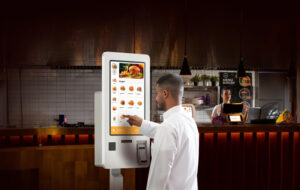
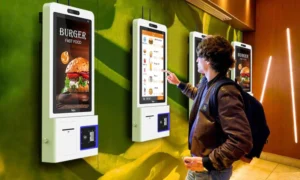
Self-Service Payment Kiosk Display is a specialized interactive kiosk system designed to facilitate payment transactions without the need for human intervention. These kiosks typically feature touchscreen interfaces and secure payment processing capabilities, allowing users to make payments for various products and services independently. Self-Service Payment Kiosk Displays are used to streamline payment processes, enhance customer convenience, and reduce waiting times. Let’s explore what a Self-Service Payment Kiosk Display is, why it is used, and where it finds applications:

What is a Self-Service Payment Kiosk Display?

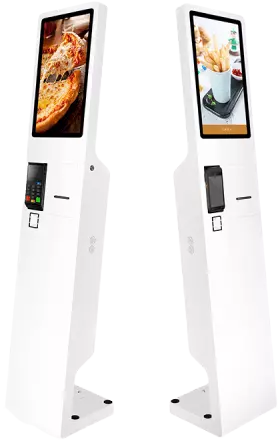
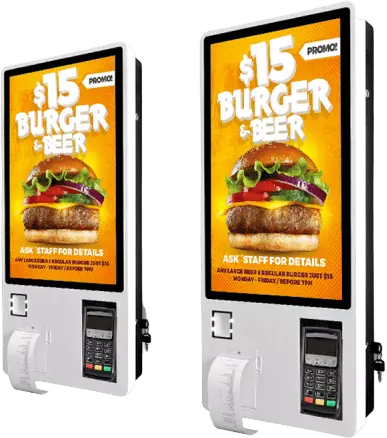
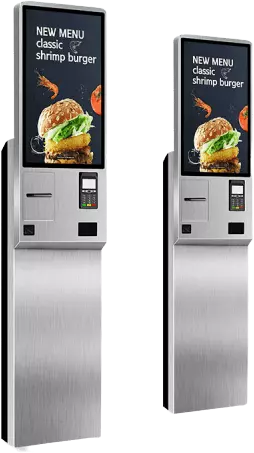
A Self-Service Payment Kiosk Display typically includes the following key components:

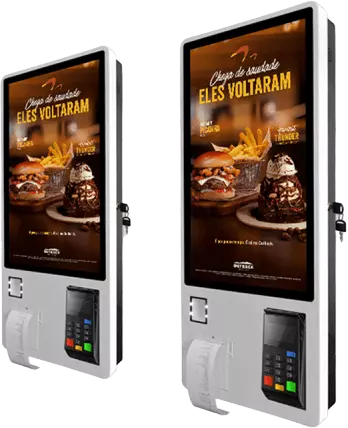
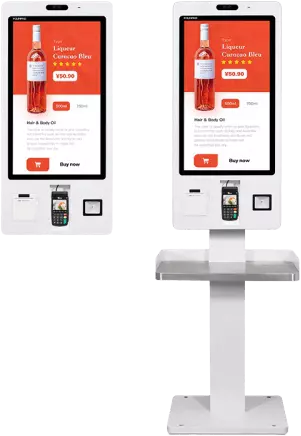
  • Touchscreen Interface: The kiosk is equipped with a user-friendly touchscreen interface that guides users through the payment process.
  • Payment Processing Hardware: It features secure payment processing hardware, such as card readers, EMV chip card readers, NFC (Near Field Communication) technology for mobile payments, and cash receptors.
  • Printer: Some kiosks have built-in receipt printers to provide users with transaction receipts.
  • Barcode Scanner: For certain applications, such as bill payment, barcode scanners may be included to scan payment-related documents or barcodes.
  • Enclosure: The kiosk is housed within a durable and secure enclosure to protect the components and ensure the safety of users’ transactions.
  • Connectivity Options: Self-Service Payment Kiosk Displays typically have network connectivity options (e.g., Wi-Fi, Ethernet) for real-time transaction processing and remote monitoring.

Why Use a Self-Service Payment Kiosk Display?

  • Efficiency: These kiosks streamline payment processes, allowing customers to make payments quickly and conveniently, reducing waiting times and enhancing operational efficiency.
  • Customer Convenience: Self-service payment kiosks offer users the flexibility to make payments at their own convenience, 24/7, without having to wait in long lines or during non-business hours.
  • Reduced Human Error: By automating payment processes, self-service kiosks reduce the potential for human errors in manual payment transactions.
  • Cost Savings: Businesses and organizations can reduce labor costs by deploying self-service payment kiosks, as they require minimal staff supervision.
  • Improved User Experience: Self-service kiosks provide a user-friendly interface that simplifies the payment process, making it more accessible for a wide range of users.

Where Are Self-Service Payment Kiosk Displays Used?

Retail: Retailers use self-service payment kiosks for customers to make in-store payments for purchases, utility bills, and layaway plans.

Bill Payment Centers: Bill payment kiosks are deployed in various locations, including utility company offices and retail outlets, allowing customers to pay bills for utilities, cable, phone services, and more.

Financial Institutions: Banks and credit unions utilize self-service payment kiosks for loan payments, credit card payments, and account deposits.

Parking Facilities: Parking lots and garages deploy self-service payment kiosks to facilitate parking fee payments.

Healthcare: Hospitals and medical clinics use self-service payment kiosks for patients to make co-pays, cover medical expenses, and settle bills.

Government Services: Government agencies implement self-service payment kiosks for citizens to pay fines, taxes, and fees, as well as renew licenses and permits.

Transportation: Public transportation systems, including buses and subway systems, have self-service payment kiosks for ticket purchases and fare payments.

Entertainment Venues: Movie theaters, theme parks, and concert venues use self-service payment kiosks for ticket sales and concessions.

Hospitality: Hotels and resorts may have self-service payment kiosks for guests to settle room charges, spa services, and restaurant bills.

Educational Institutions: Colleges and universities deploy self-service payment kiosks for students to pay tuition fees, housing expenses, and other educational costs.

Self-Service Payment Kiosk Displays are valuable tools for businesses and organizations seeking to improve payment processes, enhance customer satisfaction, and optimize operational efficiency. As technology continues to advance, these kiosks may incorporate additional features, such as biometric authentication and mobile wallet integration, to further enhance security and convenience for users.

Food and Beverage: Restaurants, cafeterias, and fast-food establishments implement self-service payment kiosks to enable customers to place orders, customize meals, and make payments at their own pace.

Self-Checkout in Retail: Many retail stores offer self-service checkout kiosks, allowing shoppers to scan and pay for their items without assistance from store staff.

Car Rental and Car Wash: In the automotive industry, self-service payment kiosks are used for car rental payments, car wash fees, and parking fees at rental lots.

Self-Service Check-In: Airlines and hotels utilize self-service payment kiosks for travelers to check in, select seats, and make additional purchases like baggage fees and upgrades.

Vending Machines: Modern vending machines often incorporate self-service payment kiosks, accepting various forms of payment, including credit cards and mobile payments.

Self-Service Tax Filing: Tax preparation services offer self-service payment kiosks for clients to pay their tax bills and associated fees.

Self-Service Printing: Printing and document centers deploy self-service payment kiosks for customers to print, copy, and scan documents, paying for these services through the kiosk.

Parking Ticket Payment: Municipalities and parking authorities use self-service payment kiosks for citizens to pay parking fines and fees conveniently.

Gaming and Entertainment: Casinos and gaming establishments provide self-service payment kiosks for patrons to load gaming credits and cash out their winnings.

Charity and Donation Kiosks: Nonprofits and charitable organizations place self-service payment kiosks in high-traffic areas to collect donations for various causes.

Theme Park and Amusement Park Payments: Theme parks use self-service payment kiosks for ticket purchases, season pass renewals, and locker rentals.

Membership Renewal: Gyms, clubs, and membership-based organizations offer self-service kiosks for members to renew subscriptions and pay dues.

Prepaid Card Reloads: Kiosks enable customers to reload prepaid cards for services like mobile phones, transit, and gift cards.

Event Registration: At conferences and trade shows, self-service payment kiosks are used for attendee registration and payment processing for conference fees.

Self-Service Ordering for Takeout and Delivery: Restaurants and food delivery services deploy self-service payment kiosks for customers to place orders and make payments for takeout and delivery.

Library Fine Payment: Libraries use self-service payment kiosks for patrons to settle fines, fees, and printing charges.

Retail Returns and Refunds: Retailers with flexible return policies may offer self-service kiosks for customers to process returns and receive refunds.

Government Services: Government agencies use self-service payment kiosks for citizens to pay for various government services, including permits, licenses, and fines.

Self-Service Bike and Scooter Rentals: In urban areas, self-service payment kiosks facilitate bike and scooter rentals for short-distance transportation.

Hotel Express Checkout: Some hotels offer express checkout through self-service payment kiosks, allowing guests to settle their bills quickly.

Self-Service Payment Kiosk Displays continue to gain popularity across a wide range of industries and sectors due to their ability to enhance customer convenience, reduce transaction time, and improve overall operational efficiency. These kiosks are evolving with technology trends, including contactless payment options, mobile wallet integration, and advanced security features, making them even more versatile and valuable in various payment scenarios.

Contactless and Mobile Payments: With the increasing popularity of contactless payment methods and mobile wallets like Apple Pay and Google Pay, self-service payment kiosks are adapting to offer these convenient and secure payment options.

Receipt Options: Many self-service payment kiosks allow users to choose their preferred receipt delivery method, such as email or text message, reducing paper waste and providing a digital record of the transaction.

Enhanced Security Measures: Kiosk providers are continually improving security features, including encryption and tokenization, to safeguard user payment data and protect against fraud.

Integration with Loyalty Programs: Some self-service payment kiosks offer integration with loyalty and rewards programs, allowing customers to earn points, discounts, or special offers with their transactions.

Self-Service Account Management: Beyond payments, these kiosks are expanding to offer users the ability to manage their accounts, view transaction history, and update personal information.

User Analytics: Businesses and organizations are leveraging data analytics to gain insights into user behavior and preferences, enabling them to optimize kiosk placement and content strategies.

Self-Service Ordering for Customization: In the food industry, self-service payment kiosks enable customers to customize their orders, from burger toppings to coffee preferences, enhancing the dining experience.

Interactive Advertising: Self-service payment kiosks can display targeted advertisements and promotions, generating additional revenue for businesses and providing users with relevant offers.

Remote Monitoring and Support: Kiosk operators can remotely monitor the performance of self-service payment kiosks, diagnosing issues and performing maintenance without the need for on-site visits.

Integration with Inventory Management: In retail environments, kiosks can be integrated with inventory management systems, allowing users to check product availability and place orders for out-of-stock items.

Queue Management: Self-service payment kiosks with queue management features enable users to join virtual queues, reducing physical wait times and enhancing the overall customer experience.

Compliance with Regulatory Standards: Kiosk providers are staying up-to-date with regulatory standards, such as PCI DSS (Payment Card Industry Data Security Standard), to ensure secure payment processing.

Multilingual Support: To cater to diverse user populations, self-service payment kiosks often offer multilingual support, allowing users to select their preferred language for the transaction.

Integration with E-commerce: Some businesses use self-service payment kiosks as an extension of their e-commerce platforms, providing customers with an additional payment channel.

Integration with CRM Systems: Integration with Customer Relationship Management (CRM) systems allows businesses to track customer interactions and tailor their offerings accordingly.

As self-service payment kiosk technology continues to evolve, businesses and organizations are finding innovative ways to leverage these solutions to enhance customer experiences, reduce operational costs, and drive revenue growth. Whether it’s in traditional retail settings, the food industry, healthcare, or various other sectors, self-service payment kiosks are becoming increasingly integral to modern payment and service delivery processes.

Self Service Payment Kiosk

Self Service Payment Kiosk for Supermarket

To know more about Super Market Signage Display click learn more.

Self Service Payment kiosk for Restaurant

To know more about Super Market Signage Display click learn more.


Self-service kiosks have become a common fixture in many of our lives in recent years. Whether we’re looking for a fast way to pay and go at supermarket checkouts, ordering at a fast-food outlet, or using information points in airports, train stations, conferences, or events, these devices appear in lots of shapes and sizes. Do they make things more comfortable for customers or businesses? Are they worth the investment for the retail, food & drink, travel, events, healthcare, banking, and hospitality industries? What are the pros and cons? GCTL LED is working as a distributor and importer of Varito self-service payment kiosks in Bangladesh for a long time. To get a glimpse of our showcase, get here. 

self service payment kiosk

What is a Self Service Payment Kiosk?

A Self Service Payment Kiosk is a standalone terminal that allows customers to complete transactions without the assistance of a cashier or service representative. Think of it as a digital assistant available 24/7, ready to process payments, provide information, and even offer upsell opportunities. These kiosks typically feature a touchscreen interface, a payment processing system (card reader, NFC, QR code scanner), and potentially a printer for receipts. They can be customized to accept various payment methods, including credit cards, debit cards, mobile wallets, and even cash.

The Growing Need for Self Service Payment Kiosks in Bangladesh

Bangladesh’s economy is rapidly growing, and with it comes an increasing demand for efficient and convenient services. Several factors are driving the adoption of self-service payment kiosks:

  • Increasing Digital Literacy: More and more people in Bangladesh are becoming comfortable using digital technology, particularly smartphones and online payment platforms. This familiarity makes them more receptive to using self-service kiosks.
  • Rising Labor Costs: Employing and managing staff can be a significant expense for businesses. Self-service kiosks can help reduce labor costs by automating routine tasks.
  • Long Queues and Waiting Times: In busy environments like restaurants, retail stores, and banks, long queues can frustrate customers. Kiosks can significantly reduce waiting times, leading to improved customer satisfaction.
  • Enhanced Efficiency and Accuracy: Kiosks automate the payment process, reducing the risk of human error and speeding up transactions.
  • Improved Customer Experience: Many customers prefer the autonomy and control that self-service kiosks offer. They can browse menus, customize orders, and complete payments at their own pace.

Benefits of Implementing Self Service Payment Kiosks

Implementing a self-service payment kiosk offers a wide range of advantages for businesses of all sizes:

  • Reduced Labor Costs: As mentioned earlier, kiosks can automate tasks typically performed by employees, leading to significant cost savings. For example, one employee can oversee multiple kiosks, instead of manning a single cash register. Therefore, businesses can reallocate staff to focus on more complex tasks that require human interaction and expertise.
  • Increased Revenue: Kiosks can be programmed to suggest upsells and cross-sells, encouraging customers to purchase additional items. Furthermore, they can display promotional offers and loyalty programs, driving sales and customer engagement. In addition, the faster transaction times can lead to higher customer turnover, meaning more sales in the same amount of time.
  • Improved Customer Satisfaction: By reducing waiting times and offering a more convenient payment experience, kiosks can significantly improve customer satisfaction. Indeed, satisfied customers are more likely to return and recommend your business to others.
  • Enhanced Efficiency: Kiosks automate the payment process, reducing the risk of errors and speeding up transactions. As a result, businesses can process more customers in less time, leading to increased efficiency.
  • 24/7 Availability: Kiosks can operate 24 hours a day, 7 days a week, providing customers with access to services even outside of regular business hours. Consequently, businesses can generate revenue even when they are closed.
  • Data Collection and Analytics: Kiosks can collect valuable data on customer behavior, such as popular items, peak hours, and payment preferences. This information can be used to optimize operations, improve marketing efforts, and make better business decisions.
  • Enhanced Brand Image: Implementing self-service kiosks demonstrates that your business is innovative and committed to providing a modern customer experience. For this reason, it can help enhance your brand image and attract new customers.
  • Space Optimization: Kiosks often require less space than traditional checkout counters, allowing businesses to optimize their floor plan and create more space for other activities.
  • Reduced Order Errors: In environments like restaurants, self-ordering kiosks significantly reduce order errors, leading to less food waste and happier customers. That is to say, customers confirm their order on the screen, minimizing miscommunication between the customer and staff.

self payment kiosk

Applications of Self Service Payment Kiosks in Bangladesh

Self-service payment kiosks are versatile and can be used in a wide range of industries:

  • Restaurants: Self-Ordering Kiosk for Restaurants (Secondary Keyword) are becoming increasingly popular, allowing customers to browse menus, customize orders, and pay without waiting in line. For example, fast-food chains and casual dining restaurants are using kiosks to streamline the ordering process and reduce congestion.
  • Retail: Retail stores can use kiosks to allow customers to check prices, scan barcodes, and make payments quickly and easily. In other words, they can reduce lines and allow staff to focus on customer service.
  • Hospitals and Healthcare: Kiosks can be used for patient check-in, appointment scheduling, and payment of medical bills. This in turn can reduce wait times and improve the overall patient experience.
  • Banks and Financial Institutions: Kiosks can be used for bill payments, account inquiries, and other banking services. In addition, they can provide access to banking services outside of regular banking hours.
  • Transportation: Kiosks can be used for ticket purchases, boarding pass printing, and other transportation-related services. Therefore, airports, train stations, and bus terminals are increasingly deploying kiosks.
  • Government Services: Kiosks can be used for paying utility bills, taxes, and other government fees. Moreover, they can provide access to government information and services.
  • Educational Institutions: Kiosks can be used for tuition payments, library fines, and other school-related transactions.
  • Entertainment Venues: Movie theaters, amusement parks, and sports stadiums can use kiosks for ticket sales, food and beverage orders, and merchandise purchases.

Types of Self Service Payment Kiosk

There are several types of self-service payment kiosks, each designed for specific applications:

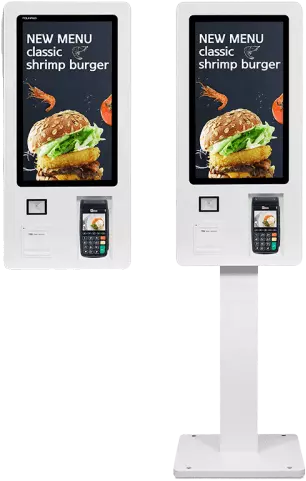
  • Wall-Mounted Kiosks: These kiosks are mounted on a wall and are ideal for locations with limited floor space.
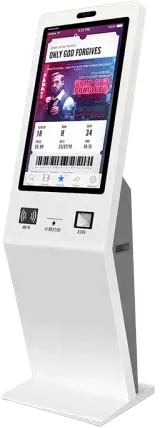
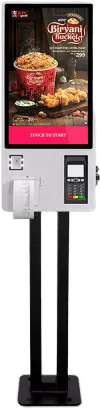
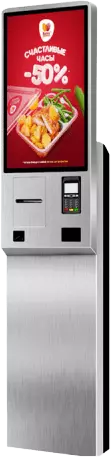
  • Freestanding Kiosks: These kiosks are standalone units that can be placed anywhere in a store or business.
  • Countertop Kiosks: These kiosks are designed to be placed on a countertop and are ideal for smaller businesses.
  • Outdoor Kiosks: These kiosks are designed to withstand harsh weather conditions and are ideal for outdoor locations.

Key Features to Look For in a Self Service Payment Kiosk

When choosing a self-service payment kiosk, consider the following features:

  • User-Friendly Interface: The kiosk should have a clear and intuitive interface that is easy for customers to use. Specifically, the touchscreen should be responsive and the navigation should be straightforward.
  • Secure Payment Processing: The kiosk should be equipped with a secure payment processing system that protects customer data. That is, it should comply with industry standards such as PCI DSS.
  • Reliable Hardware: The kiosk should be made of durable materials and designed to withstand heavy use. For example, the touchscreen should be scratch-resistant and the printer should be reliable.
  • Remote Management Capabilities: The kiosk should be able to be managed remotely, allowing businesses to monitor performance, update software, and troubleshoot issues. To clarify, this can save time and money on maintenance.
  • Customization Options: The kiosk should be customizable to meet the specific needs of your business. This includes branding, language options, and payment methods.
  • Integration with Existing Systems: The kiosk should be able to integrate with your existing POS system, inventory management system, and other business software. By all means, this will streamline operations and improve efficiency.
  • Accessibility Features: The kiosk should be accessible to people with disabilities, complying with accessibility standards. Of course, this includes features like adjustable screen height and audio output.

Choosing the Right Self Service Payment Kiosk Supplier in Bangladesh

Selecting the right supplier is crucial for a successful kiosk implementation. Here’s what to consider:

  • Experience and Reputation: Choose a supplier with a proven track record of providing high-quality kiosks and reliable support. In that case, look for testimonials and case studies.
  • Product Quality: Ensure that the supplier offers kiosks that are made of durable materials and equipped with the latest technology. To be specific, ask about the components used and the manufacturing process.
  • Customization Options: Select a supplier that can customize the kiosk to meet your specific needs and branding requirements. That is, they should be able to modify the hardware, software, and design of the kiosk.
  • Technical Support: Choose a supplier that offers comprehensive technical support, including installation, maintenance, and troubleshooting. Notably, ask about their response time and service level agreements.
  • Price and Value: Compare prices from different suppliers, but don’t just focus on the lowest price. Rather, consider the overall value, including product quality, features, and support.
  • Local Presence: Choosing a supplier with a local presence in Bangladesh can be beneficial for faster support and service. With this in mind, consider their location and service network.=

Varito Self-service kiosks in retail and library kiosk machine

One of the most natural settings in which we come across self-service kiosks in Bangladesh is retail, due to the advancements that something like self-service payment kiosks can make to a retailer to the bottom line. 1 or 2 staff members can oversee multiple self-pay kiosk PoS units, which frees up other workers for other tasks, such as providing enhanced customer service.

A retail self-service payment kiosk doesn’t certainly have to be in the same location as manned tills. It frequently takes up a much smaller footprint per unit in a retail setting. Earlier underutilized shop-floor spaces can be adapted to offer self-service PoS kiosks for consumers. It can be far profitable at peak season to enable more consumers to complete their purchases via either option, decreasing the number of shoppers that abandon their basket or cart when they spot a long or slow-moving chain.

Varito Self-service kiosks in healthcare

This type of technology is steadily establishing a place for itself in the healthcare sector. Hospitals in various parts of Bangladesh now use self-service health kiosks to enable patients to check themselves in for outpatient meetings, which reduces the strain on reception staff and is also designed to reduce queuing times. Also used by many social surgeries to help regulate patient arrivals and waiting times, this type of technology is becoming ever more useful in this setting.

Another possible self-service kiosk healthcare application is an update to the weighing devices that used to be found in chemists all over the country. A big screen on which you can not only view your weight but can also input a few other select details, such as height and age, can give a range of healthy choice recommendations to the client.

Touch screen Self Service kiosks in the food industry

Self-service kiosks for food shopping are becoming more common. In addition to the big restaurant’s example earlier, you can see there are now KFC touch screen payment kiosks in Bangladesh, currently at help stations on the motorway network, and Burger King self-service kiosks in similar locations. In settings like this, with vast volumes of clients coming through year-round, it makes sense to introduce queue and order time, defeating measures that will maximize revenue by fulfilling more orders in a shorter amount of time through Varito self-service bill payment kiosks for fast food transactions.

Varito Self-service kiosk in the travel & hospitality industry

One of the first places to take widespread use of Varito self-service kiosks were airports. This technology lends itself well to the type of busy, fast-paced environment where many repeated tasks don’t necessarily require human interaction in the majority of cases. Self-service kiosks in airports can be a significant factor in the line and waiting time reduction, although not every passenger is comfortable yet.

Airports don’t have a corner when it comes to the travel sector; train operators have also been using self-service payment machines and data points for some time. Passengers are having the opportunity to avoid the counter queues and instead use a self-service printing kiosk for simple ticket buying. Or to find out the answer to their frequently-asked question is something that frees up staff resources for other projects and can help to improve the flow of people through the railway station and on to their destinations.

Digital Self Service Payment Kiosk Price in Bangladesh

The Digital self service payment kiosk price in Bangladesh varies depending on several factors, including the type of kiosk, features, customization options, and the supplier. Generally, you can expect the price to range from BDT 150,000 to BDT 500,000.

As a seller and partner of Varito Self-payment Kiosk, GCTL LED provides several kiosk machines, like Self Service kiosk for Supermarket or Self-Service Payment Kiosk for Restaurant. With barcode scanning or printing function.

Types of Kiosk Price Range (BDT)
21.5″ Self Service Payment Kiosk BDT 50,000 – BDT 2,50,000
24″ Self Service Payment Kiosk

BDT 2,50,000 – BDT 5,00,000

Factors Affecting Price (Hardware, Software, Features)

  • Screen Size & Touch Technology
  • Built-in Camera, Printer, Card Reader
  • Custom Software Integration
  • Warranty & After-Sales Support

Self Service payment kiosk for Supermarket

Free Wall Mount Facility Kiosk


Android OS

Self Service payment kiosk TPS700 is an Android-based terminal, 

supporting secondary development. We provide standard SDK files to developers.

SKU # MWE643-37


21.5-inch Touch Screen

This retail payment kiosk has a 5-points touch screen, which can be easily zoomed in or out. 

G+G capacitive screen, wear-resistant, corrosion-resistant.

Self Service payment kiosk for Supermarket

Digital Display Kiosk Screen


Thermal Graphic Printer with auto cutter

Printing receipts at high speed without jamming. Changing paper rolls is easy.


Big Size QR-code Scanner

It scans barcode smoother and more visible. 

Barcode Scanner of kiosk TPS700 supports reading the goods linear barcodes and the mobile QR-codes.

Thermal Graphic Printer with auto cutter

Big Size QR-code Scanner Kiosk


Functional EFTPOS Machine TPS900

With the support of the EFTPOS TPS900, the Telpo Retail kiosk machine 

TPS700 greatly expands the self-service feature.

Full Certificates

The payment function has passed the financial certifications 

such as EMV, PCI, PayPass, Paywave, MIR, India Rupay, etc.


What is the price range of VARITO Self Service payment kiosk for Supermarket in Bangladesh?

The price range of VARITO Self Service payment kiosk for Supermarket in Bangladesh at GCTL from BDT 5,50,000 to BDT 7,50,000. All Kind of Display signage, LED, LCD Display, Android Advertising Kiosk, self-service information kiosk, P6 Billboard are available on Germany Computer and Telecom Ltd.

Self Service payment kiosk for Supermarket:

Our Self Service payment kiosk for Supermarket are fitted with a commercial grade LCD panel with an LED back-light. It have the ability to be in constant use 24/7 . Digital signage can be used in both landscape and portrait modes, have no buttons, controls, logos or branding on show and are much brighter than LCD panels found in home TVs or computer monitors. Their tempered glass face, rounded corners, steel enclosure with super slim profile and aluminium surround all add to their captivating tablet-like aesthetics and also protect the internal components from potential damage GCTL Sales Floor Standing Digital signage in Bangladesh.

Free Wall Mount Facility:

A wall mount is included with your screen at no extra cost; ensuring that you have a complete signage solution in the box. Each screen comes with a slim mount, allowing you to install your screen in either landscape or portrait orientation. The mount provides a secure and aesthetically pleasing flush finish to the wall.

Self Service payment kiosk for Supermarket with Multiple Facility:

Should you need to use the screen as a monitor you can connect the screen to an external source, like a PC, using the HDMI input or the VGA and 5mm audio jack inputs. GCTL is a professional Importer, Distributor of digital signage with comprehensive integrating R&D Team. Our Digital Signage, Kiosk, advertising player, LCD AD Player. Good server and Good quality is our company culture. We are committed to establish a long-term relations of cooperation with all our customers. look forwarder to start cooperation with you!

self-service-payment-kiosk-for-restaurant

LCD Digital Signage-importer


MWE643-36 HD Stand Alone Digital Signage LCD Screen Display For Restaurant

  • Panel size: 26”32”42”46” 55” 65” 70” 72” 84”
  • Aspect ratio: Optional
  • High resolution: 1920*1080
  • Dot Pitch: 0.227mm(H)*0.227mm(W)
  • Number Of Color: 16.7M
  • Brightness: 500cd/m2
  • Contrast ratio:1000:1
  • Responsive time: 8ms
  • Panel life: above 50000 hours
  • Logo: customized LED Logo
  • Black Light Type : customized LED Logo
  • Operation way : Remote controler
  • Audio format: Wave/MP3/WMA/AAC all audio format support
  • Image format: JPEG/BMP/TIFF/PNG/GIF

LCD Digital Signage Quality

  • Support shock and dust function.
  • The shell is made of high quality metallic material and is painted with powder coating.
  • Use high-transparent glass (2-6 mm) as a protective layer to prevent the LCD display panel fracture or deformation.
  • Back cover cold rolled sheet.
  • Support remote control, Key is optional.
  • Multi touch :2-32 points (OPtional).


self-service-payment-kiosk-for-restaurant

Digital Signage LCD Screen Display For Restaurant


Features of Touch Screen Digital Signage

  • The anti-theft lock system prevents the storage device (SD / CF card) from being stolen.
  • Built-in speakers: 2 x 5W.Amplifier / 3.5mm audio jack is optional. (Optional).
  • Automatically play circles when you turn on them.
  • Allows breakpoint / AD to manage the memory of the system.
  • Automatically generate playlists / mix display of video, images and music.
  • Support regular broadcast programs, timer switch machine.
  • Support split-screen function, different areas show different functions.
  • Support video overlay text, video and graphic mix.


Adaptive To Your Business Needs★

  • Support Window XP, Window 7, Windows 8, android system.
  • Support remote release multimedia information, WEB background management.
  • Support for local download: Receive media content via the web.
  • WIFI function: support 802,1b / g, 3G / 4G wireless network transmission.
  • Support RTC real-time clock support time and date display, weather and other information display.
  • HDMI, VGA, audio interface, input and output interfaces, etc. Contact us.


LCD Digital Signage Best Quality

Touch Screen Digital Signage


About Us-LCD Digital Signage-Professional Manufacturer

  • Marvel insures the ISO 9000 management system certification, and all of our products are manufactured in accordance with the “ROHS” compliance program.
  • Support ODM and OEM services, custom design.
  • By helping customers improve management efficiency, enhance the shopping experience, increase store damage prevention capabilities, improve profitability.


What is the price range of VARITO Self Service Payment kiosk for Restaurant in Bangladesh?

The price range of VARITO Self Service Payment kiosk for Restaurant in Bangladesh at GCTL from BDT 5,50,000 to BDT 7,50,000. All Kind of Display signage, LED, LCD Display, Android Advertising Kiosk, self-service information kiosk, P6 Billboard are available on Germany Computer and Telecom Ltd.